Navadurga and Lord Ganesha: A Comprehensive Research Analysis Across Vedic, Puranic, Tantric, and Astrological Perspectives
An in-depth research analysis exploring the relationship between Navadurga and Lord Ganesha across Vedic literature, Tantric chakras, Puranic narratives, and the 12 astrological houses.
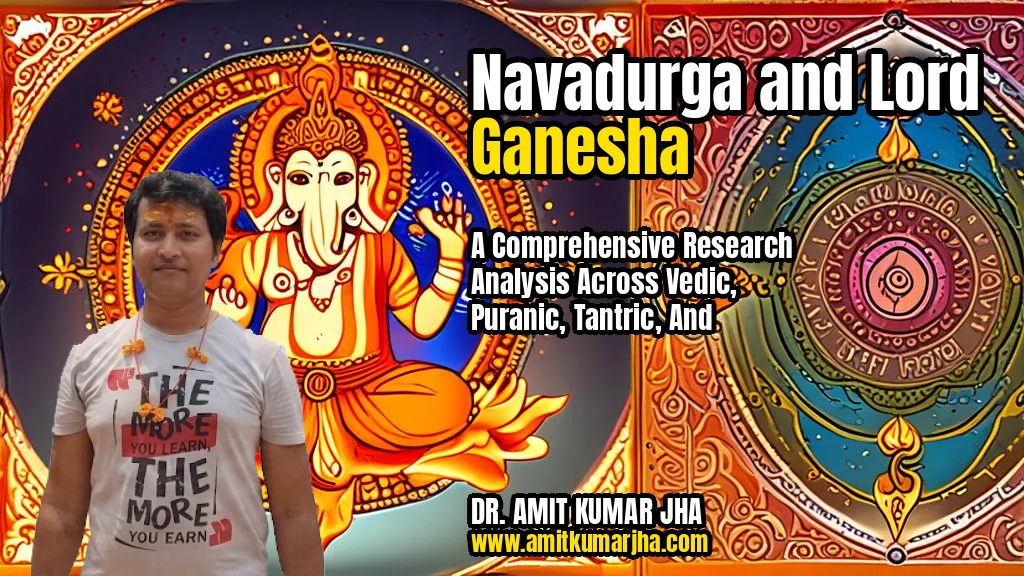

In Indian philosophy, Vedic literature, Tantra, and Astrology, Navadurga and Lord Ganesha occupy vital positions as the supreme embodiments of Shakti (Dynamic Power) and Buddhi (Intellectual Wisdom). While Navadurga—the nine manifestations of Goddess Durga—symbolizes the cosmic forces of creation, sustenance, and dissolution, Lord Ganesha embodies discrimination, obstacle-removal, and supreme wisdom (Siddhi). Both emerge from the singular primary source (Adi Shakti Parvati); Ganesha is born of Parvati's creative intent, and Navadurga represents her nine distinct operational facets.
This research blog explores the deep interconnection between Navadurga and Ganesha through Vedic hymns, Puranic narratives, Tantric energy centers, human physiology, and the twelve houses (Bhavas) of the astrological birth chart.
1. Vedic and Puranic Foundations: Power and Wisdom Intertwined
In Vedic and Puranic traditions, Navadurga and Ganesha represent the unified expression of divine energy and supreme intelligence.
The Vedic Context
Vedic literature observes the Goddess as Vak—the creative cosmic word (Rigveda 10.125)—and Ganesha as Ganapati—the supreme lord of celestial groups and remover of impediments (Rigveda 2.23.1).
A profound reference appears in the Atharvaveda (Kanda 9, Sukta 9, Mantra 12):
"पञ्चपादं पितरं द्वादशाकृतिं दिव आहुः परे अर्धे पुरीषिणम्।
अथेमे अन्य उ परे विचक्षणे सप्तचक्रे षडर आहुरर्पितम्।"
- Dvadasakritim (12 Manifestations / Houses): Represents the manifestation of Navadurga across the 12 cosmic houses of creation.
- Saptacakre (7 Energy Centers): Connects the nine forms of Durga with the Kundalini energy system, rooted at the Muladhara Chakra governed by Lord Ganesha.
- Pitaram (The Sustainer): Points to the foundational Shiva principle upon which both Navadurga (Shakti) and Ganesha (Intellect) operate.
The Puranic Narrative
According to the Durga Saptashati (Markandeya Purana), Navadurga manifests through the three Gunas (Sattva, Rajas, Tamas) to restore cosmic order. Simultaneously, the Ganesha Purana and Shiva Purana detail the birth of Ganesha from Goddess Parvati’s essence, representing the creative seed of Shakti.
- Navadurga: The nine forms—Shailaputri, Brahmacharini, Chandraghanta, Kushmanda, Skandamata, Katyayani, Kalaratri, Mahagauri, and Siddhidatri—govern the universal cycles of creation, maintenance, and transformation.
- Lord Ganesha: Honored as Prathama Pujya (the First-Worshipped), his elephant head symbolizes expansive intellect, while his mount (Mushaka) signifies subtle consciousness subduing ego.
Mother-Son Relationship
Ganesha is the son of Parvati, and Navadurga represents the nine forms of Parvati. This relationship underscores the harmony between dynamic energy (Navadurga) and guiding wisdom (Ganesha). Prioritizing Ganesha's worship before invoking Durga demonstrates that wisdom is required to safely awaken and channel spiritual power.
2. Tantric Philosophy: Kundalini Awakening and the Chakras
In Tantric Sadhana, Navadurga represents the ascending Kundalini Shakti, while Lord Ganesha anchors the foundational gateway at the base chakra.
- Muladhara Chakra (Root): Governed by Lord Ganesha and Goddess Shailaputri. Ganesha guards the root where Kundalini resides, removing blockages so the upward journey can begin.
- Swadhisthana Chakra (Sacral): Governed by Goddess Brahmacharini, focusing on penance, focus, and purity of intent.
- Manipura Chakra (Solar Plexus): Governed by Goddess Chandraghanta, conferring bravery, power, and metabolic drive.
- Anahata Chakra (Heart): Governed by Goddess Kushmanda, embodying cosmic creation, maternal love, and compassion.
- Vishuddha Chakra (Throat): Governed by Goddess Skandamata, representing wisdom, expression, and maternal guidance.
- Ajna Chakra (Third Eye): Governed by Goddess Katyayani, destroying subtle inner enemies and bestowing intuitive command.
- Sahasrara Chakra (Crown): Governed by Goddess Kalaratri, Mahagauri, and Siddhidatri, leading to dissolution of illusion, ultimate purification, and spiritual liberation (Moksha).
Tantric Iconography
- Ganesha's Attributes: The Pasha (noose for tethering passions), Ankusha (goad for self-control), Modaka (sweetness of spiritual bliss), and Parashu (axe for severing worldly illusion) symbolize intellectual control over energy.
- Navadurga's Attributes: Weapons and divine mounts (lion, peacock, eagle) represent courage, dynamic force, and creative authority, harmonizing with Ganesha's role in clearing obstacle pathways.
3. Astrological Synthesis: Mapping the 12 Houses (Bhavas)
In Vedic Astrology (Jyotish), the 12 houses map human existence. Ganesha governs key intellectual and liberation houses (2, 5, and 12), whereas Navadurga operates as pervasive energy across all 12 houses.
-
- Navadurga: Shailaputri (Embodies soul stability, primary energy, and firm resolve).
- Ganesha: Ekadanta / Prabhava (Represents the initial impulse of creation and singular mental focus).
-
- Navadurga: Brahmacharini (Governs discipline, spiritual learning, and devotion).
- Ganesha: Sumukha / Sughosha (Bestows refined speech, memory, and academic focus).
-
- Navadurga: Chandraghanta (Grants courage, drive, and physical energy).
- Ganesha: Sharp intellect directing physical actions and courage.
-
- Navadurga: Kushmanda (The cosmic creator, nurturing inner contentment and peace).
- Ganesha: Emotional grounding and protection from home environment afflictions.
-
- Navadurga: Skandamata (Mother of Skanda/Kartikeya, nourishing creative wisdom).
- Ganesha: Sumedha / Medhavi (The supreme embodiment of intelligence, memory, and discernment).
-
- Navadurga: Katyayani (Vanquisher of demonic forces and conflict).
- Ganesha: Strategic intellect for neutralizing debts, diseases, and opposition.
-
- Navadurga: Tripurasundari (Governs harmony, attraction, and creative balance).
- Ganesha: Harmony and balance in social and worldly unions.
-
- Navadurga: Kalaratri (Destroys ignorance, fear of death, and negative influences).
- Ganesha: Deep occult wisdom and protection during spiritual transitions.
-
- Navadurga: Mahagauri (Symbolizes spiritual purity, virtue, and divine grace).
- Ganesha: Guidance of the inner guru and alignment with cosmic law.
-
- Navadurga: Bhuvaneshwari (Governs authority, cosmic leadership, and duty).
- Ganesha: Discrimination and ethical success in professional endeavors.
-
- Navadurga: Kamala (Bestows prosperity, spiritual wealth, and abundance).
- Ganesha: Intellectual application that converts effort into fruitful gains.
Trikona and Kendra Balancing
- Trikona Houses (1, 5, 9): Represents the trine of destiny and righteousness. Ganesha's influence over House 5 (Intellect) and House 12 (Moksha) aligns naturally with Shailaputri (H1), Skandamata (H5), and Mahagauri (H9), keeping power guided by virtue.
- Kendra Houses (1, 4, 7, 10): Represents the pillars of daily action. Ganesha provides analytical direction while Navadurga provides the dynamic power needed to sustain worldly responsibilities.
4. Human Anatomy and Embryological Symbolism
The macrocosmic birth chart manifests directly within human physiology:
- Governed by Sumedha Ganesha and Shailaputri Durga (Purity of Thought and Focus).
- Governed by Sughosha Ganesha and Brahmacharini (Discipline of Perception and Speech).
- Governed by Kushmanda (Center of Vital Energy and Contentment).
- Governed by Medhavi Ganesha and Skandamata (Assimilation of Physical and Mental Food).
- Governed by Katyayani (Elimination of Internal Toxins and Imbalances).
- Excretory System (House 8): Governed by Kalaratri (Transformation and Purification).
- Governed by Siddhivinayaka and Siddhidatri (Completion of the Physical Cycle).
Embryological Connection: The fetal posture in the womb forms a closed loop where the head (House 1 - Creation) touches near the feet (House 12 - Completion). This structural curve mirrors the divine matrix where Ganesha (Intellect) and Navadurga (Form) meet at the center of existence.
In Vaishnava philosophy and texts such as the Vishnu Sahasranama, Navadurga and Ganesha function as complementary energies within the cosmic setup (Vishnu Chakra):
- Navadurga as Protective Powers: Reflects Vishnu's active forces of sustenance and righteousness, represented by terms like Dharma, Sakshi, Shanti, and Kamala.
- Ganesha as Intellectual Force: Reflects Vishnu's wisdom aspects, represented by terms like Sumedha, Jyoti, and Hamsa.
Ritual Sequence in Navratri
- Initial Ganesha Worship (Day 1): Begins the festival to establish mental stability, clear subtle obstructions, and ground the seeker at the Muladhara level.
- Sequential Durga Worship (Days 1–9): Systematically elevates practitioner consciousness from physical stability (Shailaputri) up to ultimate spiritual realization (Siddhidatri).
6. The Necessity of Balance: Power and Wisdom
- Power Without Intellect (Navadurga without Ganesha): Raw energy lacking strategic direction can cause chaos, destructive conflict, or unchecked aggression (afflicting Houses 6 and 8).
- Intellect Without Power (Ganesha without Navadurga): Analytical wisdom lacking kinetic drive results in theoretical passivity and an inability to manifest thoughts into action (stagnation in House 5).
- The Ideal Synthesis: When Navadurga’s dynamic force combines with Ganesha’s guiding wisdom, a practitioner accomplishes the four human goals: Dharma (Righteousness), Artha (Prosperity), Kama (Fulfillment), and Moksha (Liberation).
Conclusion
The relationship between Navadurga and Lord Ganesha offers a comprehensive framework linking philosophy, yoga, physiology, and astrology. Whether evaluated through Kundalini meditation, birth chart analysis, or ritual worship, Navadurga provides the dynamic energy (Shakti), while Ganesha provides the steering intelligence (Buddhi). Together, they guide human consciousness from initial physical manifestation (Muladhara / House 1) to ultimate spiritual liberation (Sahasrara / House 12).