The Historic Bama Kali of Shantipur: History, Mystical Legend, and Her Esoteric Dance
Explore the ancient history, mystical legends, and the extraordinary esoteric dance of Bama Kali in Shantipur, West Bengal. Includes Vedic and Tantric Sanskrit shlokas, transliterations, meanings, and Shakta traditions.
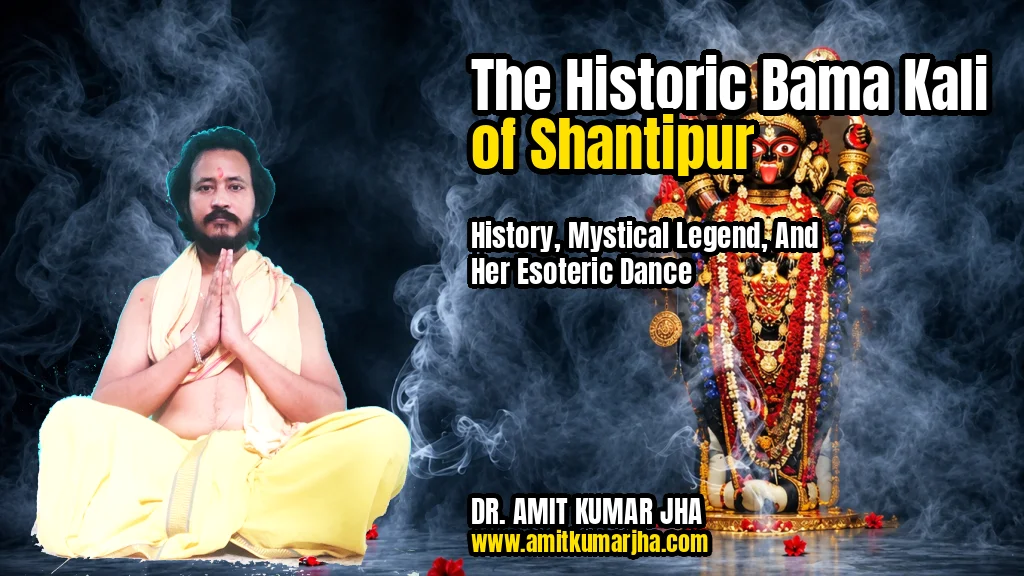

Nestled along the sacred banks of the Hooghly River in the Nadia district of West Bengal, the historic town of Shantipur has stood for centuries as a vibrant crucible of Bengali spirituality, literature, and philosophical synthesis. While widely celebrated as a premier center of Gaudiya Vaishnavism due to its profound association with Sri Advaita Acharya, Shantipur simultaneously harbors an equally ancient, deeply esoteric, and fiercely guarded tradition of Shakta Tantra. At the very heart of this Tantric heritage sits the awe-inspiring worship of Bama Kali—a unique, centuries-old manifestation of the Divine Mother whose annual Puja and extraordinary ritual procession, known locally as the esoteric dance of the Goddess, draw thousands of seekers, scholars, and devotees from across India.
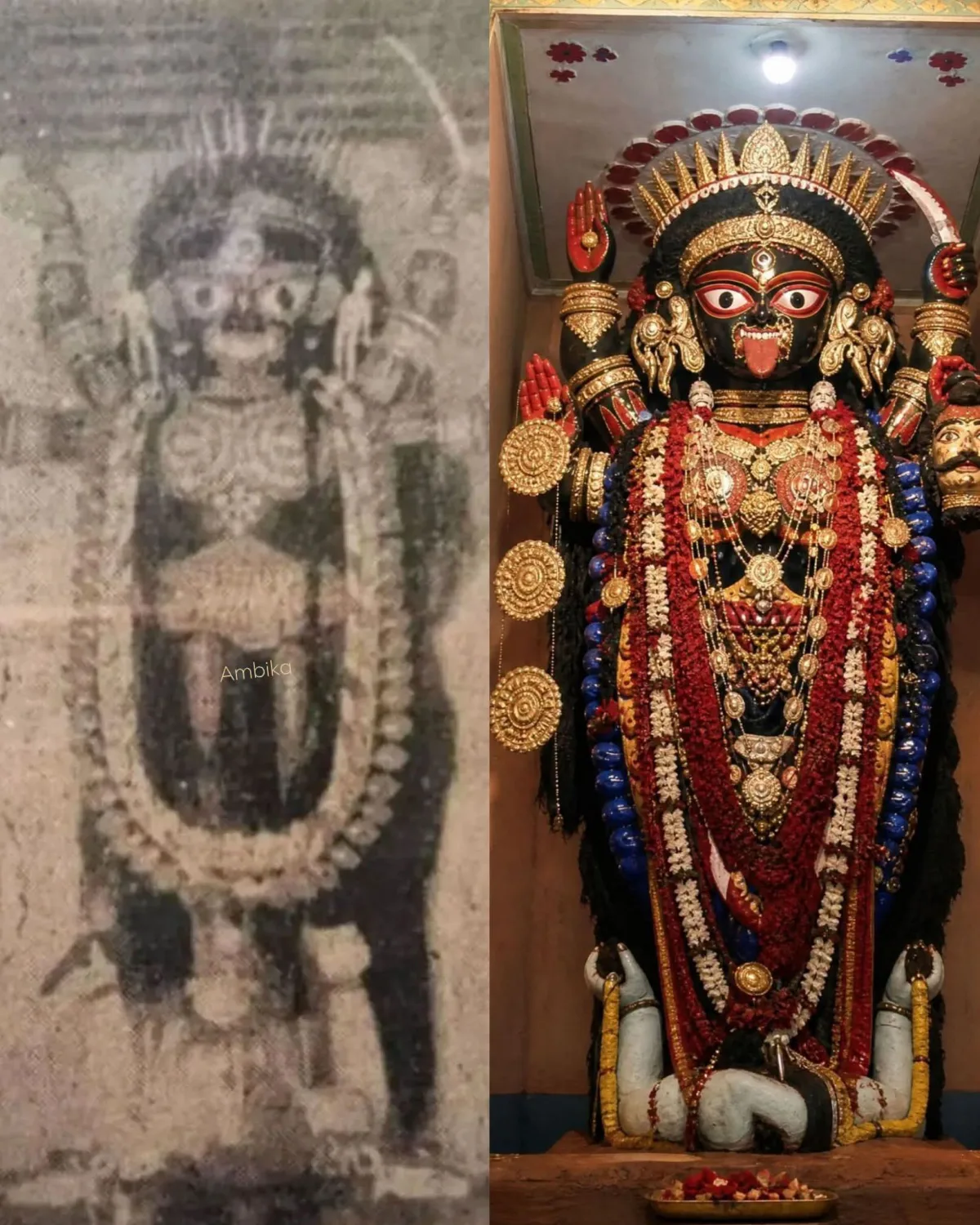
Unlike conventional depictions of Dakshina Kali, where the Goddess places her right foot forward upon the chest of Lord Shiva, Bama Kali embodies the left-hand path (Vamachara) of Tantric mysticism, placing her left foot forward in a posture of fierce, unbridled cosmic power and transformative grace. To explore the broader cultural and geographical context of this sacred region, readers can consult Santipur on Wikipedia and Kali on Wikipedia.
1. Theological Significance: Understanding Bama Kali vs. Dakshina Kali
To appreciate the spiritual gravity of Shantipur’s Bama Kali, one must first understand the iconographic and philosophical distinction between Dakshina Kali and Bama Kali within the Shakta tradition. In Sanskrit, the word Bama (or Vama) carries dual meanings: it literally translates to "left," while also signifying "beautiful," "reversed," or "contrary to worldly convention."
- The Posture of the Left Foot: In Dakshina Kali iconography, the Goddess steps forward with her right foot, signifying benevolent, accessible maternal grace suited for householders. In Bama Kali iconography, the Goddess steps forward with her left foot, activating the Ida Nadi (the lunar, cooling, inward-turning subtle channel) and symbolizing the reversal of outward worldly attachments toward inward spiritual liberation.
- Vamachara Tantra: Bama Kali is the presiding deity of Vamachara—the esoteric Tantric discipline that transcends conventional dualities of purity and impurity, auspiciousness and inauspiciousness, transforming every human experience into an offering to Supreme Consciousness.
- Fierce Compassion: Though her appearance is formidable—dark as a rain-laden storm cloud, adorned with a garland of severed heads representing the fifty letters of the Sanskrit alphabet (Varnamala), and wielding the sword of discrimination—her fierceness is directed solely at annihilating ego, delusion, and spiritual bondage.
In the sacred Mahanirvana Tantra, the supreme, all-absorbing nature of Adi Kalika as the primordial reality beyond time and space is gloriously affirmed:
कालिका कालसंहर्त्री कालरात्रिस्वरूपिणी।
आद्या शक्तिः परा विद्या सर्वभूतेषु संस्थिता॥
English Transliteration:
Kālikā kālasaṁhartrī kālarātrisvarūpiṇī |
Ādyā śaktiḥ parā vidyā sarvabhūteṣu saṁsthitā ||
Detailed Meaning:
"Goddess Kalika is the devourer of Time (Kala) itself, embodying the supreme cosmic night of dissolution (Kalaratri). She is the Primordial Power (Adi Shakti) and the highest transcendental wisdom, abiding silently within the hearts of all living beings."
2. Historical Roots of Bama Kali in Shantipur
The history of Bama Kali in Shantipur dates back over three to four centuries, emerging during an era when Bengal was experiencing a profound spiritual renaissance. During the sixteenth and seventeenth centuries, Nadia was the intellectual capital of Eastern India, renowned for Navya-Nyaya (new logic), Sanskrit grammar, Vaishnava devotion, and Tantric sadhana.
While Sri Advaita Acharya established Shantipur as a bastion of Bhakti (devotion), numerous revered Tantric adepts (Sadhakas) and royal zamindars simultaneously cultivated deep Shakta traditions along the secluded banks of the Bhagirathi-Hooghly river. Historically, the clay image of Bama Kali in Shantipur was consecrated by lineage-holding Tantric masters who performed intense nocturnal austerities (Shava Sadhana and Panchamakara rituals) away from public gaze.
- Harmony of Shaiva, Shakta, and Vaishnava Streams: One of the most remarkable historical traits of Shantipur is the seamless coexistence of Vaishnavism and Shaktism. Local lore recounts that great Vaishnava saints of Shantipur paid deep reverence to Bama Kali, recognizing her as the internal spiritual potency (Yogamaya) of Lord Krishna.
- Traditional Clay Craftsmanship: The idol of Bama Kali in Shantipur is traditionally sculpted using sacred river silt from the Ganges, following strict iconometric proportions laid down in the Brihat Tantrasara by Krishnananda Agamavagisha.
- Hereditary Custodianship: The worship of Bama Kali has been preserved across generations by dedicated priestly families and neighborhood committees who strictly guard the ancient oral liturgy, specific seed mantras (Bija Mantras), and ritual sequences passed down from their ancestors.
3. The Mystical Legend Behind Shantipur's Bama Kali
According to oral histories preserved by the elders and Tantric practitioners of Shantipur, the establishment of Bama Kali is linked to a profound mystical occurrence involving an accomplished Tantric sage and a miraculous divine vision.
Centuries ago, during a period of severe epidemic and social turmoil in the Nadia region, a devout Tantric sadhaka entered deep meditation on the banks of the Hooghly on the night of Kartika Amavasya (the new moon night of Diwali). Seeking divine intervention to protect the townspeople from suffering, he invoked the Goddess not in her gentle domestic aspect, but in her supreme, obstacle-destroying form.
In the depths of midnight, the Goddess appeared in his vision stepping forward with her left foot, her hair unbound like dark storm clouds, radiating blinding effulgence. She instructed the sage to craft her image precisely in that posture—with her left foot placed upon the reclining Shiva—and assured him that wherever her image was carried in rhythmic devotion, disease, fear, and negative forces would instantly vanish from the soil of Shantipur. Following her command, the sage consecrated the first clay idol of Bama Kali, initiating a sacred tradition that remains unbroken to this day.
4. The Esoteric Dance of Bama Kali: Ritual, Rhythm, and Trance
The defining hallmark that sets the Bama Kali of Shantipur apart from virtually every other Kali Puja in Bengal is her esoteric nocturnal dance—an extraordinary ritual procession held during the immersion (Visarjan) ceremonies following Kali Puja.
In Tantric philosophy, the entire cosmos is sustained by the rhythmic cosmic dance of Shiva and Shakti (Tandava and Lasya). While Shiva dances the Tandava of dissolution, Kali dances upon the battlefield of human illusion, pulverizing ego and ignorance beneath her feet. In Shantipur, this metaphysical concept is enacted physically through an intense, deeply moving devotional ritual.
How the Esoteric Dance Unfolds
- The Sacred Palanquin and Bearers: Unlike modern processions that rely on motorized vehicles, the towering, traditionally crafted idol of Bama Kali is lifted manually upon heavy bamboo poles by dozens of barefoot devotees who have observed strict fasting, celibacy, and ritual purity prior to the event.
- The Hypnotic Percussion of the Dhak: Dozens of master Dhakis (traditional Bengali drummers) surround the idol, beating intricate, accelerating Tantric rhythms on large barrel drums (Dhak) accompanied by brass cymbals (Kansar) and conch shells. The acoustic vibration is specifically structured to induce a collective state of heightened spiritual awareness.
- The Rhythmic Swaying (Kali Nach): Synchronized precisely with the thunderous cadence of the Dhaks, the bearers move in unison—stepping forward, pivoting, rising, and dipping in rhythmic waves. To the thousands of onlookers lining the narrow heritage lanes of Shantipur, the towering goddess appears genuinely alive, swaying and dancing gracefully yet fiercely amidst clouds of fragrant incense (Dhuno) and flickering torchlight.
- Spiritual Trance and Bhava: Many participants and bearers experience profound devotional ecstasy (Bhava), feeling that the sheer physical weight of the massive clay idol vanishes as the Goddess herself guides their footsteps through the ancient streets.
This sacred dance mirrors the classical Tantric realization found in the Karpurashtakam (attributed to Mahakala), which describes the Goddess dancing in bliss upon the chest of Shiva:
गलद्रक्तमुण्डावलीकण्ठमाला
महोघोररावा सुदंष्ट्रा कराला।
विवस्त्रा श्मशानालया मुक्तकेशी
महाकालकामाकुला कालिकेयम्॥
English Transliteration:
Galadraktamuṇḍāvalīkaṇṭhamālā
mahoghorarāvā sudaṁṣṭrā karālā |
Vivastrā śmaśānālayā muktakeśī
mahākālakāmākulā kālikeyam ||
Detailed Meaning:
"Adorned around her neck with a garland of skulls, uttering a mighty roar that shatters illusion, fierce with gleaming teeth, clad only in infinite space, dwelling in the cremation ground of dissolved egos, with unbound flowing hair—she is Kalika, united in cosmic bliss with Mahakala (Eternal Time)."
5. Vedic Foundations of the Cosmic Dance and Nocturnal Power
Although Tantric iconography gives vivid visual form to Bama Kali, the philosophical roots of her nocturnal power and cosmic rhythm stretch directly back to the ancient Vedas. In the Rigveda (Mandala 10, Sukta 127), the Ratri Suktam invokes the Divine Mother as the sovereign Goddess of the Cosmic Night who protects all beings from darkness, fear, and unseen perils:
रात्री व्यख्यदायती पुरुत्रा देव्यक्षभिः।
विश्वा अधि श्रियोऽधित॥
English Transliteration:
Rātrī vyakhyadāyatī purutrā devyakṣabhiḥ |
Viśvā adhi śriyo'dhita ||
Detailed Meaning:
"The Goddess of the Cosmic Night, approaching, looks forth in many places with her all-seeing eyes; she has arrayed herself in all divine glories and splendor."
Furthermore, in the Markandeya Purana (Devi Mahatmyam, Chapter 7), Chamunda Kali emerges directly from the forehead of Goddess Ambika during fierce battle, demonstrating the exact swift, unstoppable momentum celebrated during Shantipur’s esoteric procession:
भ्रुकुटीकुटिलात्तस्या ललाटफलकाद्द्रुतम्।
काली करालवदना विनिष्क्रान्तासिपाशिनी॥
English Transliteration:
Bhrukuṭīkuṭilāttasyā lalāṭaphalakāddrutam |
Kālī karālavadanā viniṣkrāntāsipāśinī ||
Detailed Meaning:
"From the surface of her forehead, furrowed with a fierce frown, swiftly sprang forth Goddess Kali of formidable countenance, armed with a gleaming sword and a noose."
6. Key Specialities of Shantipur's Bama Kali Tradition
What makes the worship and cultural observance of Bama Kali in Shantipur an enduring spiritual phenomenon? Several unique features distinguish this tradition:
- Strict Adherence to Tantric Liturgy: Unlike purely social festivals, the midnight worship on Amavasya follows rigorous Tantric protocols, including Bhuta Shuddhi (purification of the five elements within the body), Nyasa (consecration of limbs with Sanskrit mantras), and specialized offerings tailored to Vamachara symbolism.
- Architectural and Artistic Continuity: The facial expression of Shantipur’s Bama Kali balances awe-inspiring majesty with compassionate maternal eyes, painted traditionally with natural mineral pigments by hereditary artisans.
- Community Solidarity and Devotional Discipline: Preparations for the Puja and the esoteric dance unite entire neighborhoods across generations. Younger devotees train for weeks to master the synchronized footwork required to carry the sacred palanquin safely and gracefully.
- Spiritual Catharsis for Devotees: For residents and pilgrims alike, witnessing the midnight Puja and the subsequent dance is considered a deeply transformative experience—a moment where individual anxieties dissolve into collective devotion and surrender to the Divine Mother.
Conclusion
The historic Bama Kali of Shantipur stands as a living monument to the depth, resilience, and philosophical richness of Bengal’s Shakta Tantric heritage. Through her left-footed stance of spiritual reversal, her centuries-old mystical origins, and her unforgettable esoteric dance accompanied by the thunderous heartbeat of the Dhaks, Bama Kali continues to remind humanity that true divine power is neither distant nor static. Rather, it is an ever-living, rhythmic cosmic force that dances within creation—destroying fear, awakening higher consciousness, and guiding every sincere seeker from darkness into eternal light.