Vastu Shastra Guidelines for Toilet Placement: Auspicious and Inauspicious Directions
A comprehensive guide based on Vastu Shastra principles for the correct placement of toilets, bathrooms, and sanitation facilities, detailing auspicious and inauspicious directions, zones, and remedies.
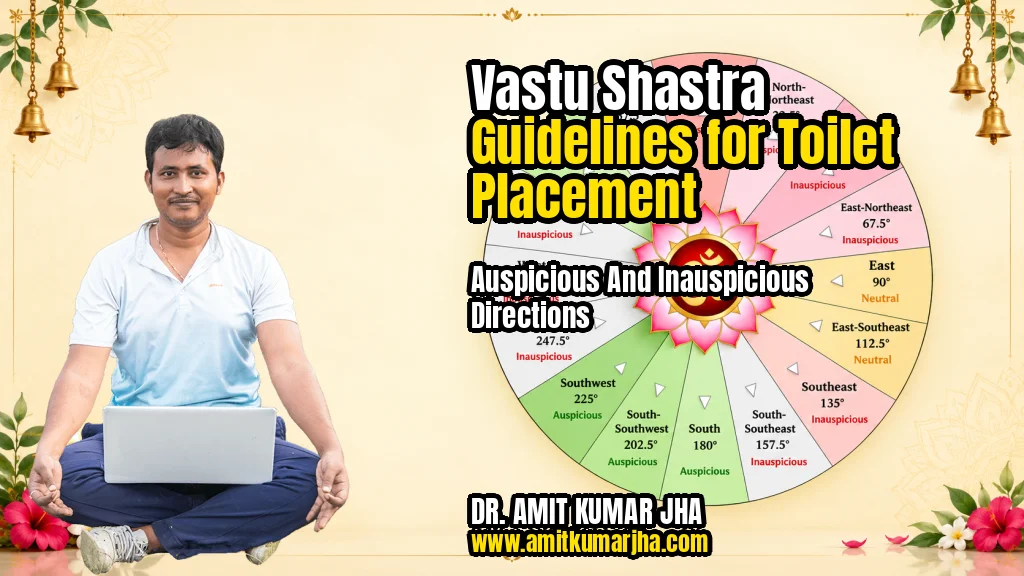

In the traditional science of Vastu Shastra, spatial architecture is harmonized with the natural five elements (Panchabhutas) to ensure the flow of positive energy (Prana) throughout a residential or commercial building. Among various architectural considerations, the placement of the toilet and sanitation facilities holds critical importance because toilets represent zones of elimination, waste disposal, and downward-moving energy (Apana Vayu).
Incorrect placement of a toilet can severely disrupt the energetic balance of a home, potentially causing financial instability, health issues, and mental stress. Conversely, placing it in the recommended zones neutralizes negative vibrations. For broader cultural context on spatial design principles, refer to Vastu Shastra on Wikipedia.
1. Overview of Auspicious and Inauspicious Zones
According to classical Vastu principles—as illustrated in directional charts—every sector of a property corresponds to specific elements, deities, and functional suitability. Toilets generate heavy, stagnant, and draining energies, which means they must be restricted to zones where such energy can be safely flushed away without contaminating the zones of growth, wealth, health, or spirituality.


- Auspicious Zones (Green/Light Green Sectors): Primarily located in the North-West (Vayavya) and certain parts of the South-South-West (SSW) or West-North-West (WNW) directions, where elimination and disposal energies naturally align.
- Inauspicious Zones (Red/Pink Sectors): Spanning the North-East (Ishanya), East, South-East (Agneya), and the core center (Brahmasthan). Placing a toilet in these zones is believed to cause severe doshas (flaws).
- Average Zones (Yellow/Orange Sectors): Areas like South-East to South transitional zones, where results are mixed and heavily dependent on internal layout or remedial measures.
2. Detailed Directional Analysis Based on the Vastu Chart
Analyzing the 360-degree compass layout reveals specific sub-directions and their compatibility with toilet placement:
- North (0°) — Inauspicious: Governed by Kubera (the Lord of Wealth) and the water element. A toilet here directly drains financial prosperity, career opportunities, and liquidity.
- The sacred Ishanya corner. This is the zone of divine energy, meditation, and health. A toilet here blocks spiritual growth, causes chronic health ailments, and creates neurological or mental distress.
- Ruled by the Sun and associated with Indra. It governs social connections, vitality, and immunity. Toilets here harm the immune system and damage social reputation.
- The zone of Agni (Fire). Placing a water-heavy, waste-disposing toilet in the fire corner creates a direct clash of elements, leading to legal troubles, accidents, or chronic domestic friction.
- While the South is governed by Yama, certain modern architectural adaptations place waste pipes along southern edges, but a direct toilet bowl in the pure South or South-East creates severe imbalances in fame and name.
- The zone of disposal and waste management. Placing a toilet here ensures that the waste energy is efficiently eliminated from the property without harming vital zones.
- Governed by Varuna. Acceptable for drainage and waste disposal when aligned correctly with sewage exit lines.
- The ideal zone for toilets. The Northwest represents movement, air, and transition, making it perfect for facilities dedicated to waste removal and purging.
3. Essential Vastu Rules and Precautions for Toilets
When designing, renovating, or correcting an existing toilet layout, several strict Vastu precautions must be observed:
- Avoid the Brahmasthan (Center): The central grid of a house is its heart. A toilet in the center destroys the health and harmony of all household members.
- Never Share Walls with Mandir or Kitchen: A toilet wall must never directly adjoin a prayer room (Pooja Mandir) or a kitchen stove area, as this causes severe spiritual and hygienic contamination.
- Direction of the Toilet Seat: While using the toilet seat, the person should ideally face North or South, avoiding facing directly East or West during elimination if possible.
- Keep Doors Closed: Toilet doors must always remain closed when not in use to prevent negative stale air and odors from entering living rooms or bedrooms.
- Slope and Drainage: Water drainage pipes and sewage outlets must flow towards the North, East, or West-North-West, ensuring that waste exits the premises smoothly without pooling in auspicious zones.
4. Vastu Remedies for Existing Toilet Flaws (Doshas)
If a toilet is already constructed in an inauspicious zone (such as the North-East or South-East) and cannot be structurally relocated, specific remedial measures can minimize negative effects:
- Use heavy doors and keep them shut at all times. Hang a heavy bamboo chik (blind) or crystal curtain outside the toilet door to block energy leakage.
- Salt and Camphor Remedies: Keep a bowl of sea salt or crystal salt inside the bathroom to absorb negative moisture and heavy energies, replacing the salt weekly. Burning camphor regularly helps purify the ambient air.
- Color Therapy: Paint the walls of an incorrectly placed toilet in neutral or grounding colors (such as off-white, light grey, or earthy tones) rather than bright reds or dark blacks.
- Use of Brass Helix or Copper Strips: Consult a qualified Vastu expert to install corrective copper or brass energy-correction strips around the toilet boundary if structural faults exist in critical zones like the North-East.
Conclusion
Adhering to Vastu Shastra guidelines for toilet placement ensures that the unavoidable waste-removal processes of daily living do not interfere with the health, wealth, and spiritual well-being of the household. Prioritizing the North-West zone for sanitation while strictly avoiding the North-East and South-East creates a balanced, harmonious living environment.